 DUKA WORLD
The Ramadan table, and what it does to a dessert business
A month that moves eleven days a year concentrates most of the annual demand for a category into a few weeks. Planning for it starts in autumn.
For most of the year, sweet pastry is an occasional purchase. During Ramadan it becomes a nightly fixture across a large part of the world, and the shape of the whole category bends around that fact.
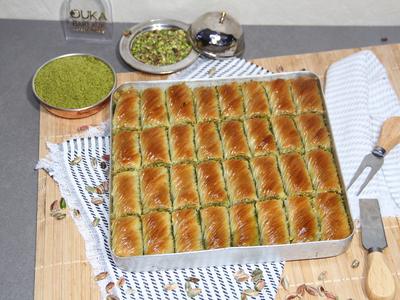
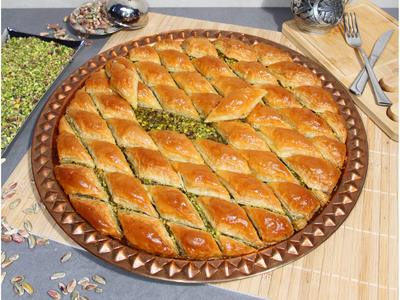
The fast breaks at sunset with iftar, and iftar is a meal that runs long and ends in sweetness. Dessert is not an optional course; it is part of the structure of the evening, eaten in company, usually shared from a tray rather than plated individually. A category built on trays meant for sharing fits that evening almost too neatly.
Why the calendar is the hard part
Ramadan follows the lunar calendar, which means it moves roughly eleven days earlier each solar year. A retailer who ran a successful promotion in the second week of March will find that the same promotion needs to be in the last week of February two years later. Nothing about the planning can be put on a fixed annual cycle.
Work backwards. The product needs to be on shelf before the month starts, because the first week sets the pattern for the rest of it. Before that, it needs to clear customs, which for most destinations means allowing for inspection. Before that, it needs to sail. Before that, it needs to be made — and a producer making to order, as serious ones do, needs the order confirmed well before that.
Then Eid
The month ends with Eid al-Fitr, which in Turkish is called Şeker Bayramı — the sugar feast — and that name tells you what happens to confectionery demand. Eid is a gifting occasion as much as an eating one: boxes go to family, to neighbours, to colleagues, to anyone the household owes a courtesy to.
Commercially this is a different product from the iftar tray. Gifting wants a printed box, a window, a sleeve that carries a story, and a weight that feels generous in the hand. The pastry inside can be a standard line. What makes it a gift is the packaging, and the margin lives there too.
Eid gifting is a packaging exercise as much as a product one. The tray inside can be standard. The box outside is what makes it a gift.
What sells, and what does not
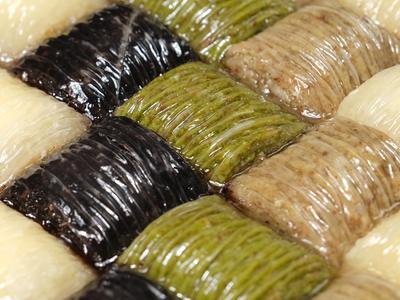
Assortments do disproportionately well in both phases. For iftar, a mixed tray gives a table variety without a host having to buy four things. For gifting, an assortment reads as more considered than a single line. Producers who offer only their hero product miss most of this.
Portion size shifts too. Smaller cuts perform better during Ramadan than they do the rest of the year, because people are eating in company after a long day and want several things rather than one large thing. The smallest cuts in a range — the coffee-service pieces — often have their best month.
The markets where it matters most
Across the Gulf and Saudi Arabia, Ramadan and Eid dominate the confectionery calendar outright. In Malaysia and Indonesia the same pattern holds around Hari Raya. In Western Europe, North America and Australia the effect is concentrated in the Muslim grocery channel, which is large in several of those countries and is where an importer proves a product before mainstream retail will look at it.
In Turkiye itself the month is significant but so is the rest of the year, because sweet pastry is an everyday purchase there in a way it is not elsewhere. That difference catches out exporters who assume their domestic seasonality transfers.
A planning rule of thumb
Confirm orders about four months ahead of the start of the month. That is not a supplier's convenience; it is arithmetic. Production to order, sailing time, customs and a retailer's own receiving schedule consume most of it, and the margin left over is what absorbs a delay.
Producers who are any good are capacity-constrained in the run-up, for the obvious reason that everyone wants the same weeks. A buyer who confirms late is not choosing to pay more; they are choosing between whatever is left and nothing.
Ramadan dates shift roughly eleven days earlier each Gregorian year. Build the order calendar backwards from the shelf date, not forwards from a fixed month.
What happens to the order book
Demand does not rise smoothly; it steps. Orders concentrate into a narrow window because every buyer in every market wants delivery in the same few weeks, and producers hit capacity long before the month begins. The practical effect is that late buyers are not choosing between suppliers — they are choosing between whatever production slots remain and none.
Capacity is people, not equipment. A workshop can run its ovens harder but it cannot conjure skilled rollers for a seasonal peak, which is why the constraint bites earlier than buyers expect and why confirmed orders are honoured ahead of enquiries however large.
Formats that work
For iftar, the tray. Sharing from a single tray is how the meal actually works, and a format that requires individual plating fights the occasion. Larger catering weights outperform small retail boxes in this phase, particularly in markets where extended family gatherings are the norm.
For Eid, the box. Printed carton, window, sleeve, and a weight that feels substantial when handed over. Assortments outperform single lines because a gift that shows variety reads as more considered. This is the phase where private label earns its cost, because the box is the product as far as the giver is concerned.
A backwards calendar
- Shelf date: product must be in store before the month begins.
- Minus two to three weeks: arrival, customs clearance and inland delivery.
- Minus four to six weeks: sailing, depending on route.
- Minus eight to ten weeks: production, to order.
- Minus four months: order confirmed and specification locked.
Count backwards from the shelf date every year, because the month moves. Building the plan forwards from a fixed calendar date is the most common planning error in the category and it produces containers that arrive during the last week of Ramadan, when the selling is done.