 DUKA WORLD
El oficio
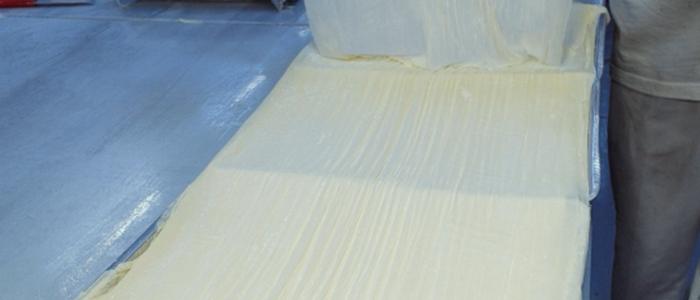
Harina y agua a las cuatro de la mañana. Masa estirada sobre largos tableros de madera. Pistacho de Antep de primera molido esa misma mañana. Mantequilla clarificada — nunca margarina, nunca aceite de palma. Fuego vivo y almíbar vertido caliente con cazo.
Doce etapas, ocho de ellas a mano.
Doce etapas, ocho de ellas a mano.

01
Flour and water
Nothing else goes into the dough. It is mixed at four in the morning so it has time to rest before the boards.

02
The dough rests
Resting is what lets a sheet stretch to translucency later without tearing. It cannot be rushed and it cannot be skipped.

03
Rolling the phyllo
Rolled down by hand on long boards until a sheet will pass light. This is the step that separates a baklava house from a bakery.

04
Milling the pistachio
Whole first-grade Antep kernels, milled the same morning they are used - fine for dusting, coarse for seams.
05
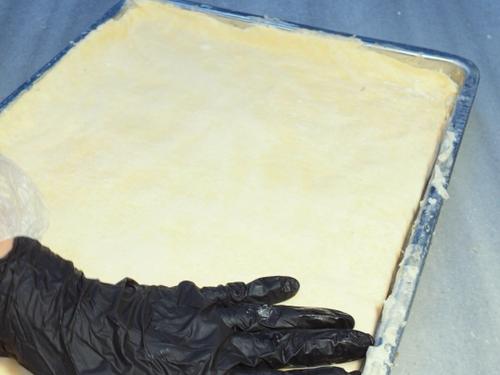
Building the tray
Sheet over sheet, laid into the tray by hand. Forty layers is the house standard and it is counted, not estimated.

06
The pistachio seam
The filling is spread edge to edge in one pass. An even seam is why every cut piece shows the same green line.

07
Clarified butter
Ladled over the assembled tray - clarified butter only, never margarine and never palm fat, anywhere in the range.

08
Scoring by hand
Every tray is cut before it bakes, by eye and by knife. The pattern on the finished tray is decided here.

09
Baking over open flame
Directly over gas, judged by colour and by sound. A baker who has done it long enough can hear when a crust has taken.

10
The sherbet
Poured hot, by ladle, over a hot tray. Too little and it is dry, too much and the crust collapses.

11
Sealing and blast freezing
Sealed in the tray and taken to -18 C within hours of baking, which is what buys the finished product twelve months of life.

12
Boxing and loading
Boxed to your artwork, palletised and loaded into a reefer - typically ten to fourteen days after the order is confirmed.