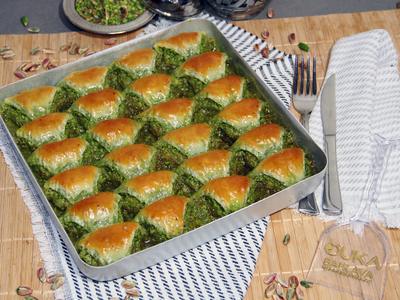
 DUKA WORLD
The cold chain, explained without jargon
Twelve months of shelf life is not a property of the pastry. It is a property of what happened to it in the first three hours, and of every handover afterwards.
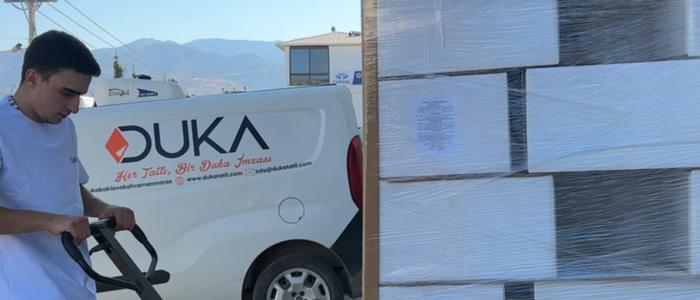
When a supplier says their product has twelve months of shelf life, they are not describing the recipe. They are describing a process, and the process only holds if every party in the chain does their part. A single warm afternoon on a loading dock can consume months of that life without leaving a visible mark.
What freezing actually does
Freezing does not kill much and it does not preserve anything in the way canning does. What it does is stop water moving. Chemical reactions, microbial growth and moisture migration all slow dramatically at minus eighteen, so a product that was crisp when it went in is still crisp when it comes out — provided the freezing itself did not damage it.
That proviso is the whole argument for blast freezing. When water freezes slowly, it forms large crystals that puncture structure. When it freezes fast, the crystals stay small and the structure survives. A domestic freezer takes hours to get a tray through the critical band; a blast freezer takes a fraction of that, which is why home-frozen baklava disappoints and commercially blast-frozen baklava does not.

The three hours that matter most
Between the oven and the freezer, the product is at its most vulnerable. It is warm, it is moist from the syrup, and the crust is beginning to take up water from below. Every hour it sits in that state is an hour of quality it does not get back, and no amount of subsequent cold recovers it.
This is the single most useful question to ask a producer, and almost nobody asks it: how many hours pass between baking and minus eighteen? A confident, specific answer tells you a great deal about how the floor is organised. A vague one tells you something too.
Freezing pauses whatever state the product was in when it went in. It does not improve anything, and it does not undo a slow afternoon between the oven and the freezer.
The handovers
A frozen container is a sealed, temperature-controlled box, and while it is running it is the safest part of the journey. The risk sits at the ends and the joins: loading, transhipment, customs inspection, unloading, the trip to the distributor's freezer, and the trip from there to a retailer.
Each of those is a moment when product can sit on a dock. Most cold chain failures are not equipment failures; they are scheduling failures, where a pallet is unloaded before its destination freezer has room for it. The fix is rarely technical.
Reading a temperature log
Reefer containers record temperature continuously, and the printout is the first thing to look at when a container lands — before opening a single carton. What you are looking for is not the average but the excursions: how high did it go, for how long, and when.
A brief spike during loading is normal and harmless. A sustained period above minus twelve is a conversation with the carrier. A chain that was never broken shows as a nearly flat line, and that flat line is worth more than any assurance in an email.
What to check on arrival
- The temperature recorder, before anything else.
- Carton condition — crushing at the base of a pallet suggests it was stacked or handled badly.
- Ice crystals inside the packaging, which indicate a thaw and refreeze cycle.
- One tray opened from the middle of the pallet, not the top. The middle is where a slow freeze shows.
- The crust: it should be audibly crisp after a controlled thaw. A soft crust means water got in somewhere.
And at the other end
Thaw slowly, in the carton, in a chiller, overnight. The carton catches the condensation that would otherwise land on the crust, and slow thawing lets the moisture redistribute rather than pool. Once thawed, treat it as a four-day chilled product and do not refreeze.
Retail freezers have their own hazard, which is the defrost cycle. Every freezer periodically warms slightly to clear ice from the evaporator, and product sitting directly in that airflow takes the hit repeatedly. Rotate stock and keep pastry away from the vents, and a tray will look as good on its last day as its first.
Twelve months frozen at minus eighteen and four days chilled at zero to four are the declared figures for this range, confirmed on the specification supplied with your pro-forma invoice.
Groupage and the extra handovers
Consolidated freight makes a small first order affordable, and it introduces handovers. A part-load is typically cross-docked at least once, sometimes twice, and each transfer is a moment when pallets sit outside a controlled environment. That is manageable, but it needs to be planned for rather than discovered.
If you are shipping groupage, ask the forwarder specifically how the consolidation point handles frozen cargo and whether the temperature record covers the whole journey or only the sea leg. A recorder that starts at the port tells you nothing about the two days before it.
Storage at your end
A distributor's freezer is usually the longest single period the product spends anywhere, so it deserves more attention than it gets. Stack to allow airflow, keep pallets clear of evaporator vents, and rotate strictly by production date rather than by arrival date — two containers landing a month apart may carry product made in the same week.
Monitor rather than assume. A freezer that drifts to minus twelve still feels cold to anyone who opens it, and the product inside will not look wrong, but the shelf life you were sold assumed minus eighteen.
When something has gone wrong
The diagnostic sequence is temperature record first, packaging second, product third. Ice crystals on the inside of a sealed tray are the clearest single indicator of a thaw and refreeze cycle. A crust that has gone soft without any visible ice usually means a slow original freeze rather than a break in transit, which is a supplier conversation rather than a carrier one.
Photograph everything before you move it, keep the recorder printout, and open the sample tray from the middle of the pallet with a witness present. Claims in frozen freight are won or lost on evidence gathered in the first hour.